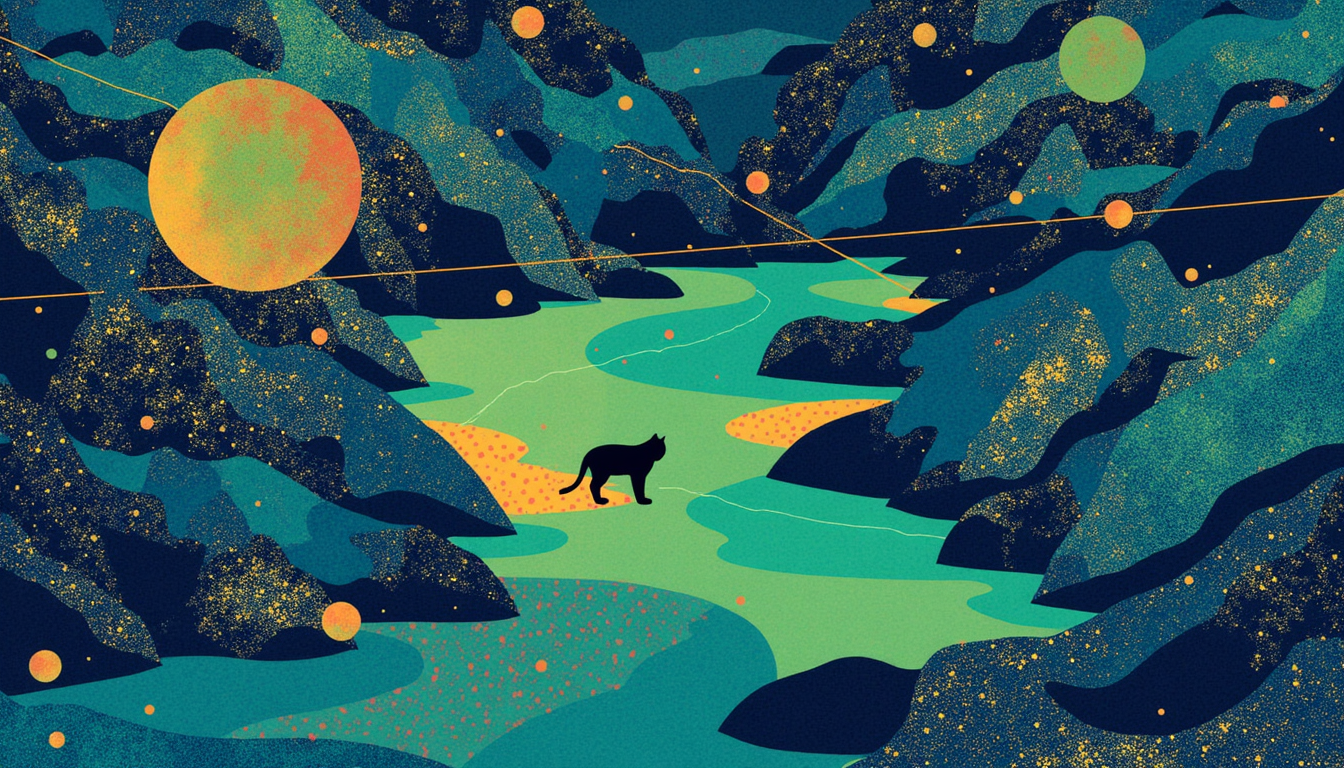
Cats move through the world with quiet precision. They don’t just react—they orient, map, signal, adapt. Beneath their everyday behaviors sits a layered system of navigation, communication, and survival that has been refined over millions of years. When you step back, those systems aren’t just fascinating biology—they’re blueprints. Instinct Mapping is the practice of studying how natural systems coordinate awareness and action, then applying those principles to human decision-making, design, and life navigation.
This isn’t about becoming more like a cat. It’s about learning how effective systems work when information is incomplete, environments change, and survival depends on sensing the invisible.
Humans Lose Direction When They Outsource Orientation
Modern humans rely heavily on external systems to tell them where they are—maps, metrics, notifications, dashboards. When those systems fail or overload, disorientation sets in fast. Anxiety isn’t always emotional; often it’s navigational. You don’t know where you are in a process, a relationship, or a phase of life.
Cats solve this differently. They don’t depend on a single signal. They layer inputs—magnetic cues, scent trails, spatial memory—into a resilient internal map. When one signal weakens, others compensate. Direction isn’t outsourced; it’s synthesized.
Humans struggle not because they lack information, but because they lack internal mapping systems that integrate it.
Internal Navigation: Building Your Own Cognitive GPS
Cats are believed to use magnetoreception, mental maps, and scent cues together—not as isolated tools, but as a unified orientation system. The lesson for humans isn’t about biology; it’s about redundancy and integration.
Instinct Mapping starts with building internal reference points:
-
Directional Signals: What consistently tells you you’re “on track”? Energy levels, clarity, momentum—not just outcomes.
-
Landmarks: Projects, values, or relationships that define where you are in a larger journey.
-
Memory Layers: Past experiences stored not as stories, but as patterns you can recognize again.
When humans lack these internal maps, every decision feels high-stakes. When they have them, uncertainty becomes navigable.
Communication Is Multi-Channel or It Fails
Cats never rely on one mode of communication. They combine scent, posture, sound, and proximity. Each channel carries different bandwidth and intent. A tail position does something a meow can’t. Silence can be as loud as sound.
Humans, by contrast, over-index on verbal communication and under-design everything else. We say things clearly but signal them poorly. Instinct Mapping reframes communication as a system, not a message.
Ask:
-
What are you signaling with timing, tone, and presence?
-
Where are your signals contradicting your words?
-
Which channels are overloaded, and which are unused?
Clarity isn’t about saying more—it’s about aligning signals.Adaptation Beats Optimization
In the wild, cats spend hours hunting with no guarantee of success. The system isn’t optimized for efficiency; it’s optimized for survival. Try, fail, adjust, repeat. In human systems, we often design for peak performance and then wonder why burnout follows.
One of the most useful adaptation frameworks borrowed from animal behavior is staged acclimation. Shelters describe a 3-phase adjustment period for cats entering new environments: initial safety, settling, and bonding. Humans go through the same phases—but rarely allow for them.
Instinct Mapping encourages designing life changes with adaptation windows:
-
Stabilize first.
-
Normalize next.
-
Deepen last.
Skipping stages doesn’t speed progress; it destabilizes it.
External Systems Should Support, Not Replace, Instinct
Modern pet owners often use GPS trackers to monitor cats. These tools are powerful—but notice the relationship: the tracker supplements the cat’s instincts; it doesn’t replace them. The cat still navigates. The system just observes.
Humans often invert this. We let external systems dictate behavior rather than inform it—metrics replacing judgment, tools replacing intuition.
Instinct Mapping draws a firm boundary:
-
Internal systems decide direction.
-
External systems provide feedback.
When tools become authorities, people lose agency. When tools become mirrors, people gain clarity.
Learning From the Quiet Masters
Cats don’t explain themselves. They don’t justify their systems. They simply work—because they evolved to integrate sensing, signaling, and adapting into one coherent loop.
Humans don’t need more hacks. We need better internal maps.
Instinct Mapping isn’t about copying nature—it’s about remembering how systems function when they’re designed for resilience instead of control. When you rebuild your internal navigation, communication, and adaptation systems, complexity stops feeling hostile.
It starts feeling navigable.