
Most organizations focus on outputs: products, features, metrics, and speed. We focus on something upstream.
This page is a visual map of how we think about systems, growth, intelligence, and accountability—especially in a world shaped by automation and AI. These are not illustrations or marketing assets. They are compressed ways of seeing: snapshots of the structures that sit beneath execution and determine whether progress compounds or collapses.
If these ideas feel unfamiliar, take your time. If they feel obvious, you’re probably in the right place.

1. From Execution to Design
Where improvement stops being about doing more and starts being about thinking differently.
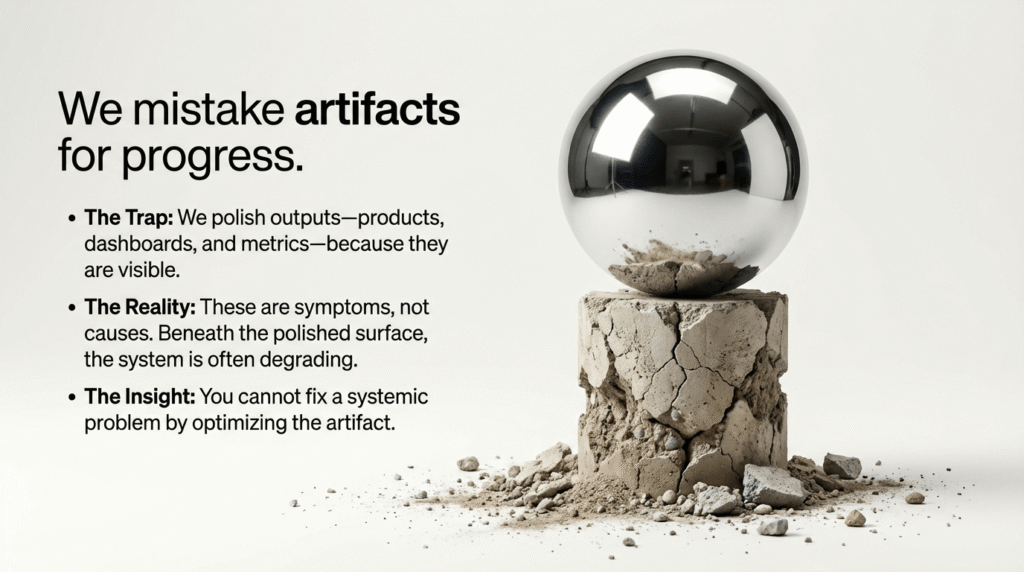
2. The Artifact Trap
Why optimizing outputs often degrades the systems beneath them.
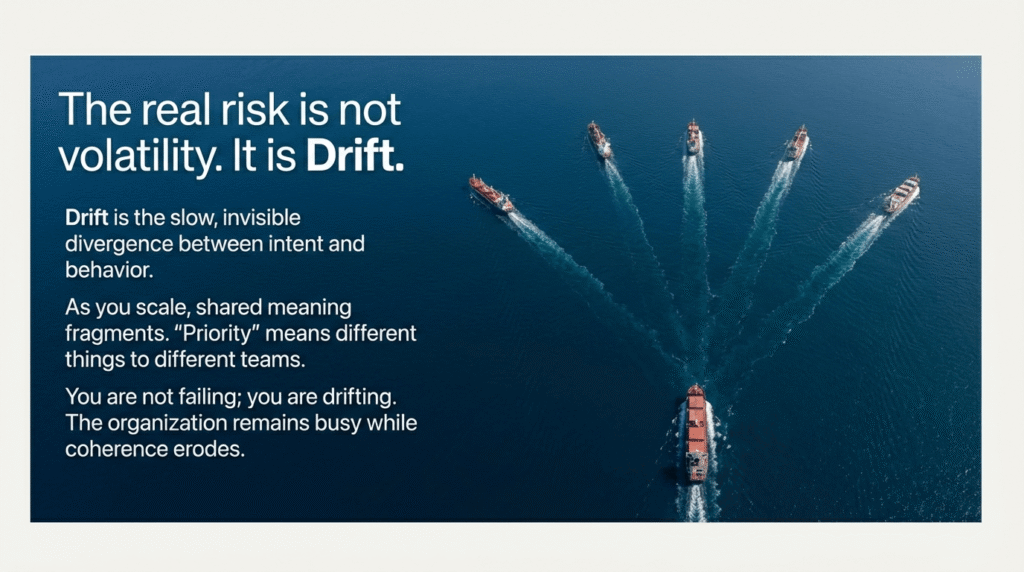
3. Drift Over Volatility
An illustration of how organizations lose coherence gradually, not catastrophically, while remaining busy and successful.
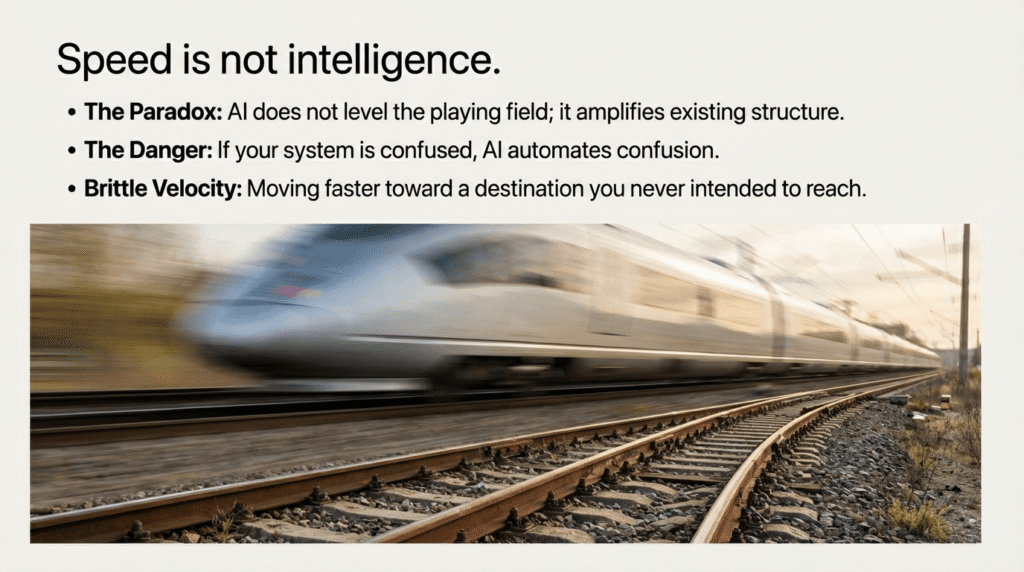
4. Speed Is Not Intelligence
Velocity amplifies structure—good or bad.
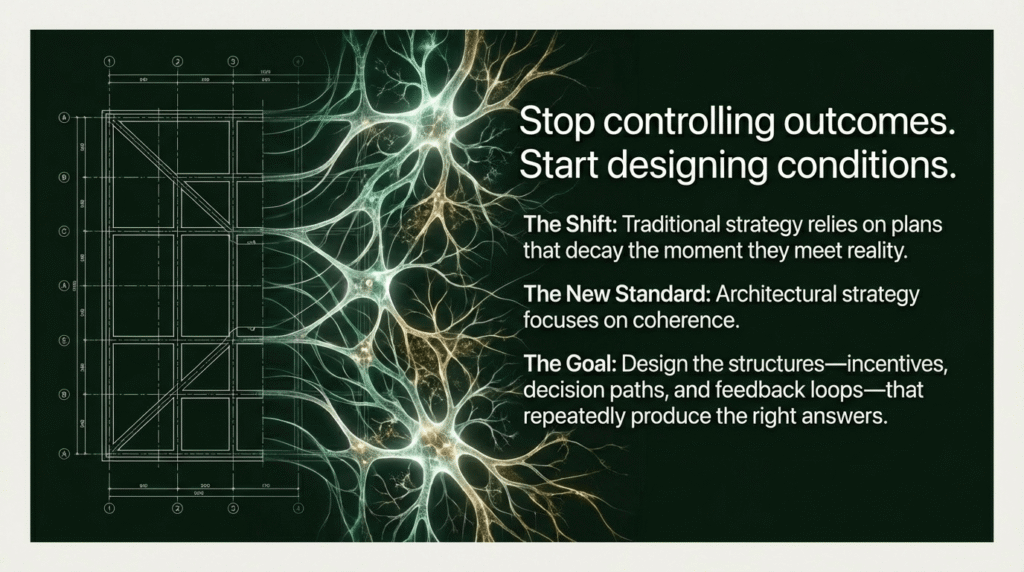
5. Control vs Coherence
Why tightening grip often accelerates decay.

6. Intelligence Is Infrastructure
How judgment becomes durable only when encoded structurally.

7. The Sovereign Boundary
Where machine synthesis must hand off to human accountability.
8. Boundaries Create Safety
Why restraint is a prerequisite for scalable intelligence.

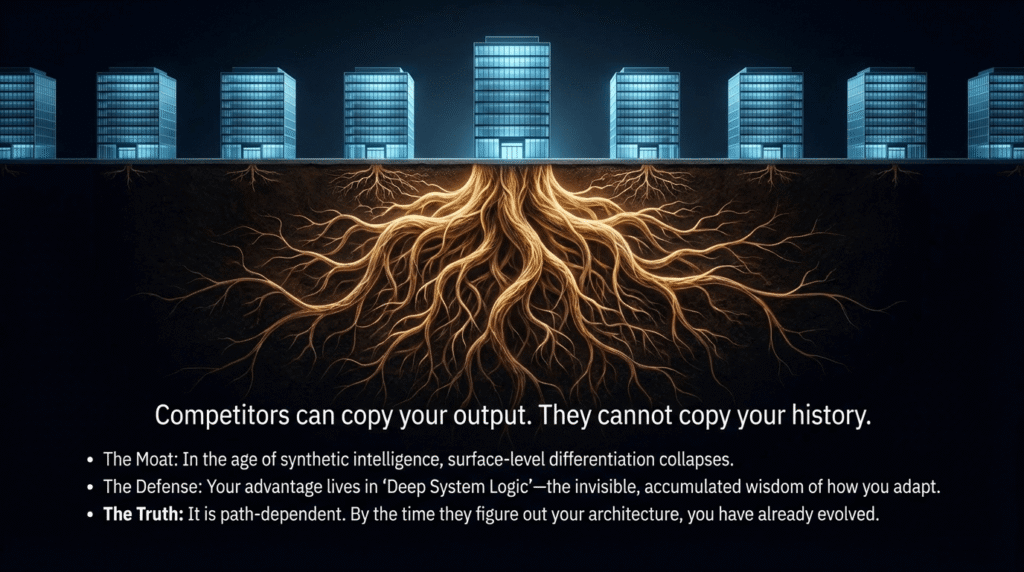
9. Learning Is Path-Dependent
Why history cannot be copied, only accumulated.

10. Architecture as Memory
How systems remember long after individuals move on.

11. Judgment Over Rules
Why scripts fail where decision grammars endure.

12. Governance at Speed
Why automation requires cognitive governance, not oversight theater.
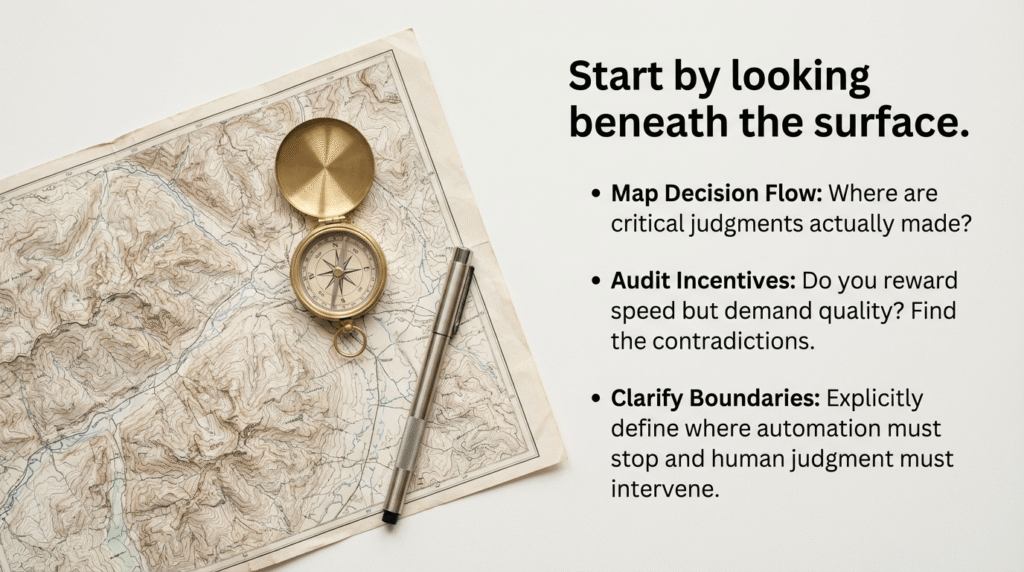
13. Stewardship Over Control
How leadership shifts as systems scale.
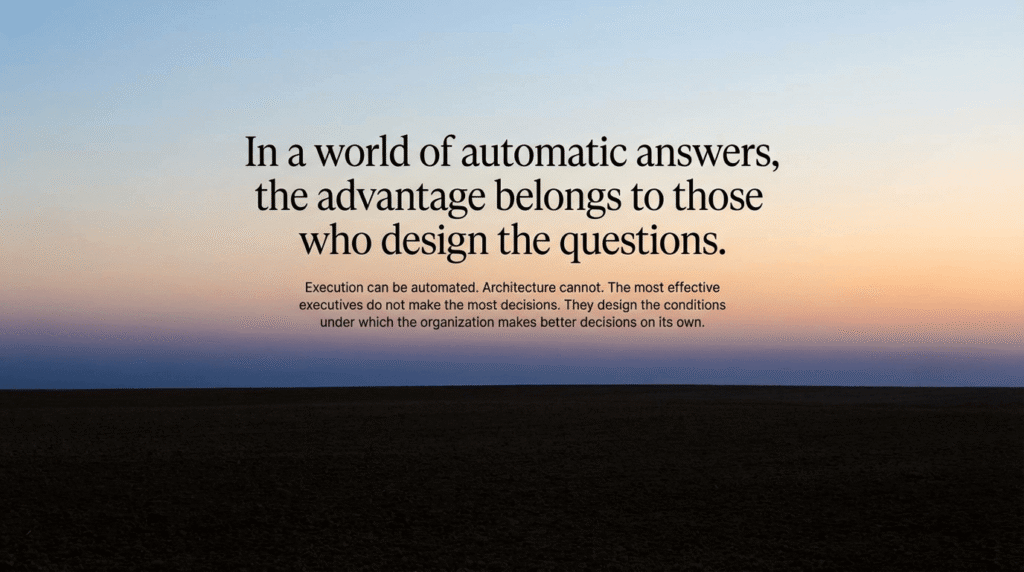
14. Designing for the Unknown
Why strong systems surface what they do not know.
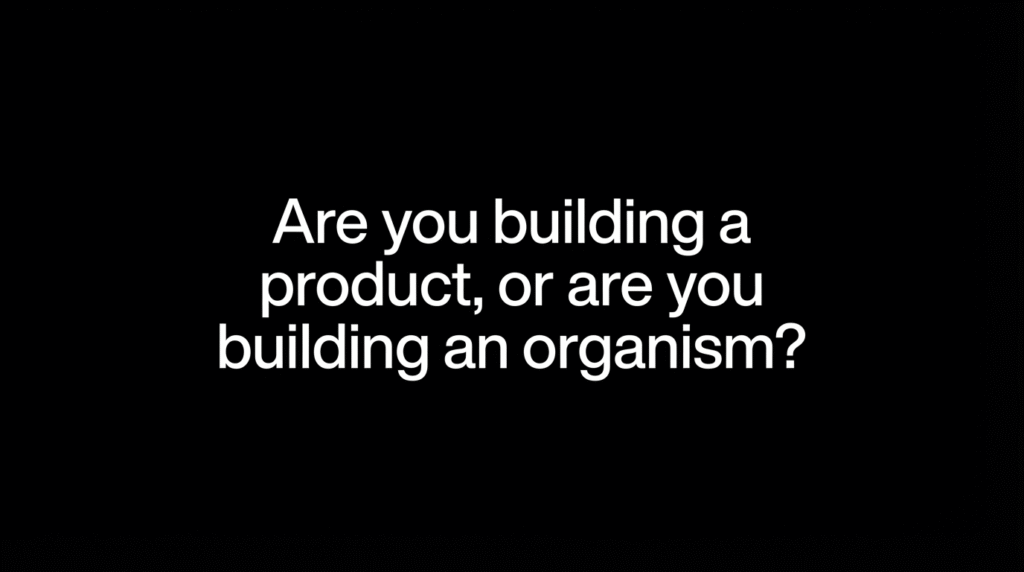
15. The Question Beneath the Product
Are you building an output—or an organism?
Summary
These are not opinions or tactics.
Some readers will move on quickly. Others will slow down, recognizing patterns they’ve felt but never named. That difference matters.
We don’t try to convince.
If this way of thinking clarifies problems you’ve struggled to name, the rest of the work here will feel familiar rather than persuasive.
Everything else on this site follows from that.