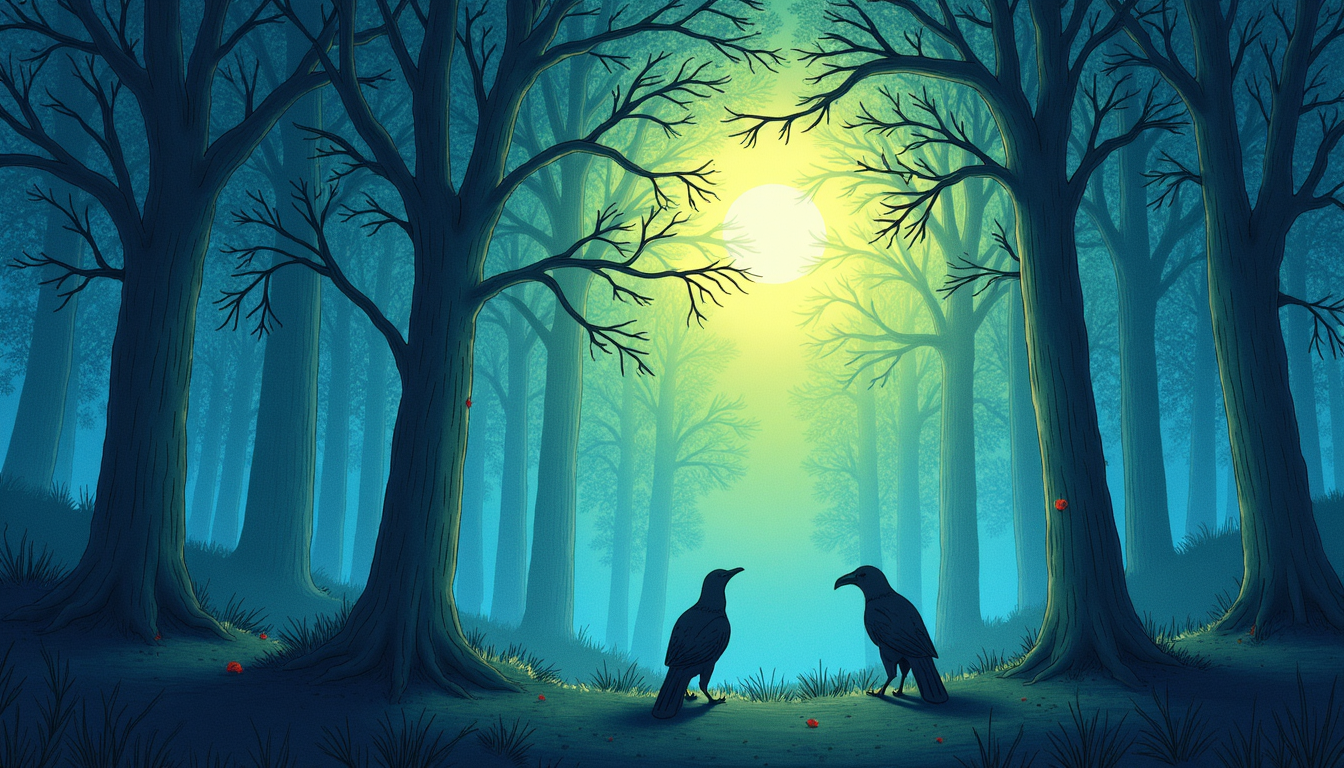
We behave differently when we know we’re being watched. Even more so when we suspect we’re being discussed.
The idea that crows watch us during the day and talk about us afterward isn’t just folklore—it’s a metaphor for something deeper and more unsettling: awareness changes systems. The moment observation enters the loop, behavior shifts. Patterns tighten. Signals become intentional. Whether the watchers are birds, audiences, algorithms, or peers, the presence of an observing intelligence rewires how actions unfold.
This is the core of Observation Loops.
Being Watched Is Not Passive
Most people assume observation is neutral—a silent act that records reality as it is. But in living systems, observation is active. It alters outcomes.
When you believe you’re being watched, you don’t just act—you perform. You compress behavior into something legible. You repeat what worked before. You avoid waste. Over time, this creates feedback: the observer learns your patterns, and you adapt to their expectations. What began as awareness becomes choreography.
Crows, famously, remember faces. They warn other crows. They adjust routes. Their watching isn’t idle curiosity—it’s data collection followed by transmission. And once that loop exists, the environment is no longer static. It’s responsive.
Observation Loops and Behavioral Drift
An Observation Loop forms when three things are present:
-
Visibility: Actions are perceivable, not hidden.
-
Memory: Observers retain what they see.
-
Communication: Observations are shared, not siloed.
Once this loop closes, behavior drifts. Not randomly, but directionally. The observed begin to optimize—not for truth, but for interpretation. The system starts bending toward what it thinks the watchers value.
This is how cultures form. This is how brands calcify. This is how individuals lose spontaneity and gain consistency—sometimes at the cost of originality.
When Observation Becomes Governance
Unchecked Observation Loops don’t just influence behavior; they govern it.
People stop asking, “What is right?” and start asking, “What will be noticed?” Creativity narrows. Risk tolerance drops. Novel signals disappear because novelty hasn’t yet been rewarded by the observers.
But the opposite can also happen. When observation rewards curiosity, generosity, or depth, those traits accelerate. The loop becomes regenerative instead of restrictive. Watching, in this case, becomes cultivation.
The difference isn’t the presence of observers—it’s what their attention reinforces.
Designing for Healthy Observation
You cannot eliminate observation from any open system. But you can design how it functions.
-
Clarify what’s being watched. Ambiguous observation breeds anxiety; defined signals breed trust.
-
Reward direction, not just results. Otherwise, systems collapse into safe repetition.
-
Create private zones. Spaces free from observation are where experimentation survives.
-
Control the narrative layer. If observers talk, shape what stories they tell.
In nature, the watched and the watchers co-evolve. In human systems, we often forget that design responsibility exists on both sides.
You Are Already in the Loop
Whether or not crows are actually talking about us is almost irrelevant. What matters is that we act as if someone is watching—and that belief alone changes everything.
Observation Loops explain why behavior hardens under scrutiny and flourishes under the right kind of attention. They remind us that awareness is never free. It costs something. But when designed intentionally, it pays something back: coherence, alignment, and meaning.
The question isn’t whether you’re being watched.
It’s what kind of system your watchers are creating—and what kind of system you’re becoming in response.