
Organizations often create systems to achieve clear objectives.
A performance system is designed to improve productivity. A reporting process aims to increase transparency. Approval structures are introduced to improve oversight and reduce risk.
At first, these systems seem reasonable.
Yet over time something puzzling can happen. The system begins producing outcomes that appear to contradict the very goals it was meant to support.
A process designed to increase efficiency slows work down. A reporting requirement intended to improve visibility overwhelms teams with administrative work. Oversight mechanisms delay decisions until opportunities pass.
The system begins working against its own purpose.
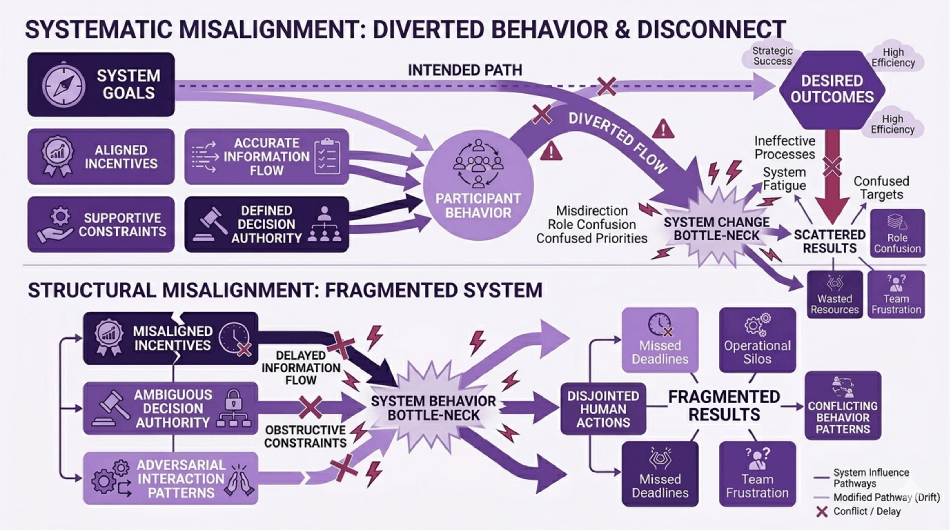
Systems Layer
This situation occurs when system structures generate behavior that conflicts with the system’s intended objectives.
Systems influence behavior through structural signals such as:
- incentives that reward certain actions
- constraints that limit available choices
- process requirements that shape how work is performed
- information flows that determine what participants can see
- feedback mechanisms that reinforce certain behaviors
When these structural elements are misaligned with the system’s goals, participants adapt their behavior in ways that satisfy the structure rather than the objective.
For example:
- metrics designed to measure performance may incentivize short-term outputs rather than long-term outcomes
- approval processes designed to reduce errors may slow decisions beyond practical timelines
- reporting requirements designed to increase oversight may divert attention away from actual work
In these cases, the structure quietly redirects behavior away from the system’s stated purpose.
Structural Translation
In simple terms, systems sometimes create rules that unintentionally push people to behave in ways that undermine the original goal.
People respond to what the system requires or rewards.
If the system rewards completing reports, people focus on reports.
If the system requires multiple approvals, people spend time navigating the approval chain.
Even if the stated goal is efficiency or innovation, the structure may encourage behavior that works against it.
Participants are not ignoring the goal — they are responding to the signals embedded in the system.
Structural Implication
When systems undermine their own goals, organizations often react by reinforcing the existing structure.
Typical responses include:
- adding more oversight
- introducing additional reporting requirements
- tightening controls or rules
- increasing pressure on individuals to meet targets
These responses may intensify the structural conditions that caused the problem.
Without examining the system’s design, the organization can become trapped in cycles where the structure increasingly contradicts the intended objective.
Leverage Insight
Systems produce behavior according to their structure, not their stated goals.
When outcomes contradict intentions, the underlying structure often contains signals that redirect behavior.
Systems Language helps reveal these structural contradictions, allowing organizations to realign system design with the outcomes they actually want to produce.
Pillar: Systems Language — perception.