

In many organizations, the same problems seem to return again and again.
A team misses deadlines. A new manager arrives and introduces new processes. For a short time things improve, but eventually the delays return.
In another environment, different people rotate through the same roles, yet similar patterns appear. Communication breaks down. Decisions slow down. Priorities collide.
At first glance, these situations seem to be about people — their choices, effort, or leadership style.
But when the same outcomes appear across different individuals, it raises a deeper question.
What if the system itself is shaping the behavior?
Systems Layer
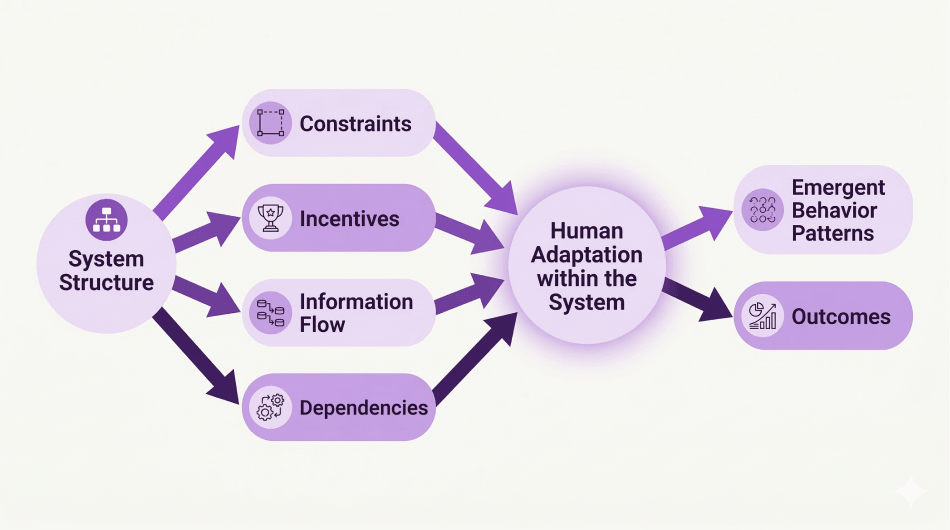
In complex environments, system behavior often emerges from structural conditions rather than individual intentions.
A system’s behavior is shaped by several interacting elements:

Understanding this principle allows leaders and teams to look for leverage in system design rather than individual correction.
Pillar: Systems Language — perception.
