

You receive a task with a brief description: “Review this and make improvements.”
At first glance, it seems simple. But as you begin, questions start to appear.
What kind of improvements?
Who is the audience?
What constraints should guide the work?
What outcome defines success?
Instead of working on the task itself, much of your effort goes into interpreting what the task actually means.
The work hasn’t become harder because of its complexity. It has become harder because of ambiguity.
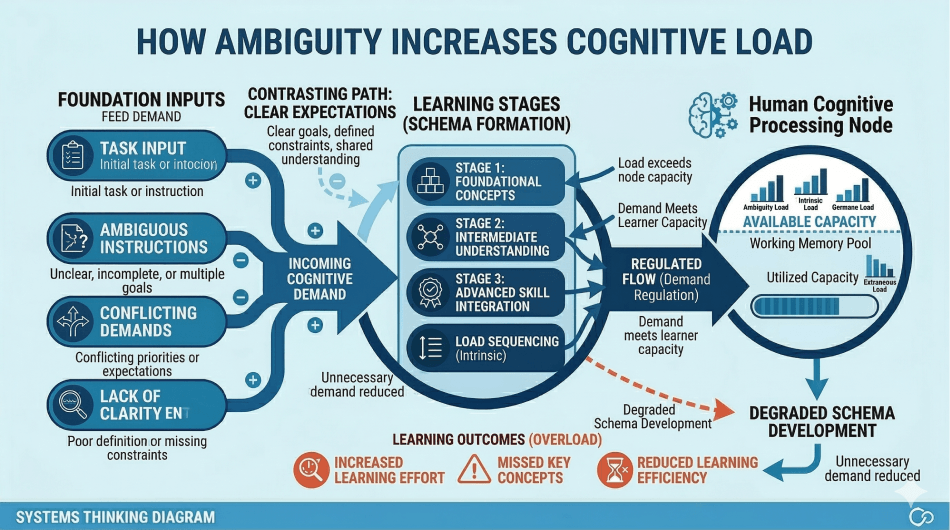
Systems Layer
Ambiguity increases cognitive load by forcing the system to construct missing structure.
In structured environments, expectations, goals, and constraints are defined clearly. This allows cognitive processing to focus directly on task execution.

Clear expectations, goals, and boundaries allow cognitive systems to allocate effort toward solving problems rather than interpreting them.
Performance improves when the system removes uncertainty that does not contribute to the task itself.
