
When something goes wrong in a team or organization, the explanation usually appears quickly.
Someone tells a story about what happened.
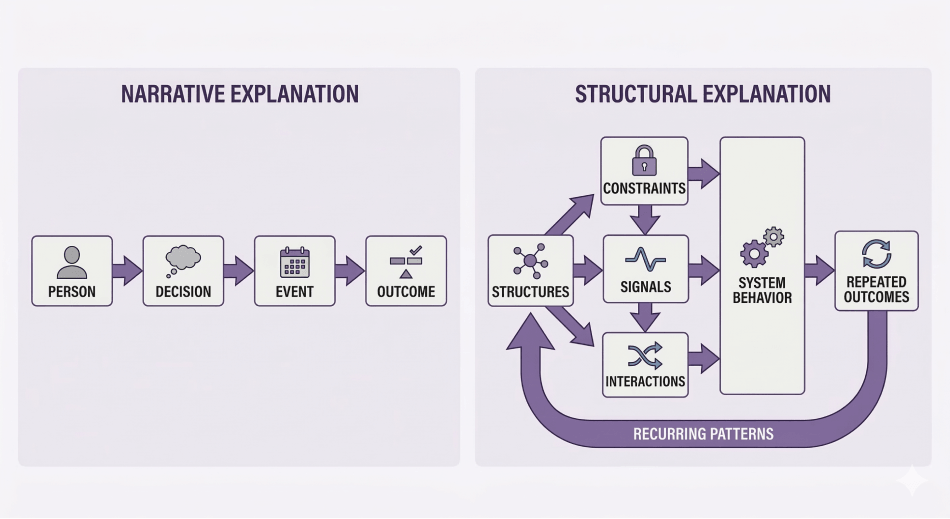
Maybe the story is that a manager made a poor decision. Maybe a team member lacked initiative. Maybe leadership failed to communicate clearly. The story connects actions and personalities into a sequence that seems to explain the outcome.
Stories are natural. They help people make sense of events.
But stories often describe what happened, not why the system produced that result.
Systems Layer
Human interpretation tends to default to narrative reasoning.
Narratives organize events into sequences involving actors, intentions, and decisions.

Learning to see structure instead of stories increases the ability to diagnose why outcomes repeat — and where structural leverage actually exists.
Pillar: Systems Language — perception.