

Some organizations appear to function smoothly even as conditions change.
Projects move forward without constant supervision. Teams coordinate effectively. Decisions flow through the system without unnecessary delays.
In other environments, even small disruptions create confusion. Responsibilities overlap, priorities shift unexpectedly, and progress slows whenever pressure increases.
The difference is often not the capability of the people involved.
It is the structural integrity of the system they operate within.
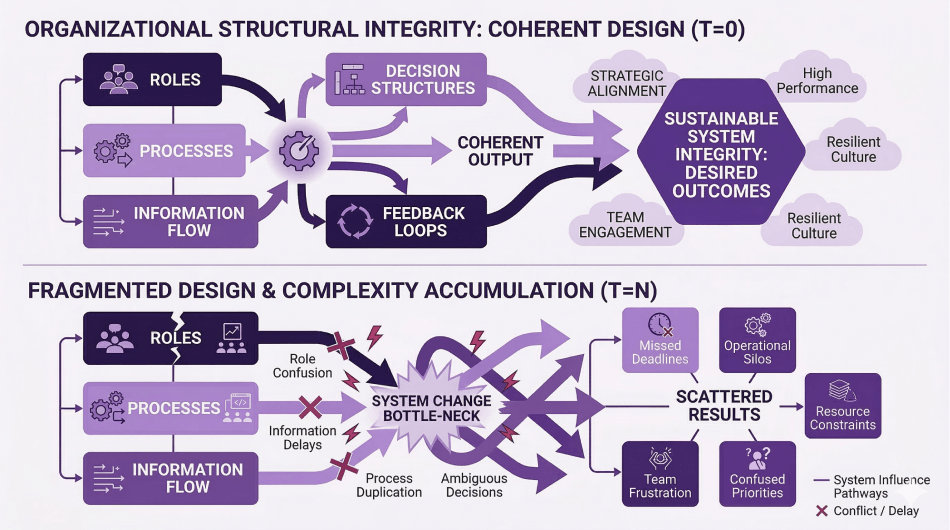
Systems Layer
Structural integrity refers to the degree to which a system’s components are organized in a way that allows it to maintain stable and reliable performance.
In organizational systems, structural integrity depends on the alignment and interaction of several key elements:

Systems Language helps reveal whether the connections between roles, processes, and information flows are strong enough to support stable system behavior.
Pillar: Systems Language — perception.
