
Organizations often create systems to achieve clear objectives.
A performance system is designed to improve productivity. A reporting process aims to increase transparency. Approval structures are introduced to improve oversight and reduce risk.
At first, these systems seem reasonable.
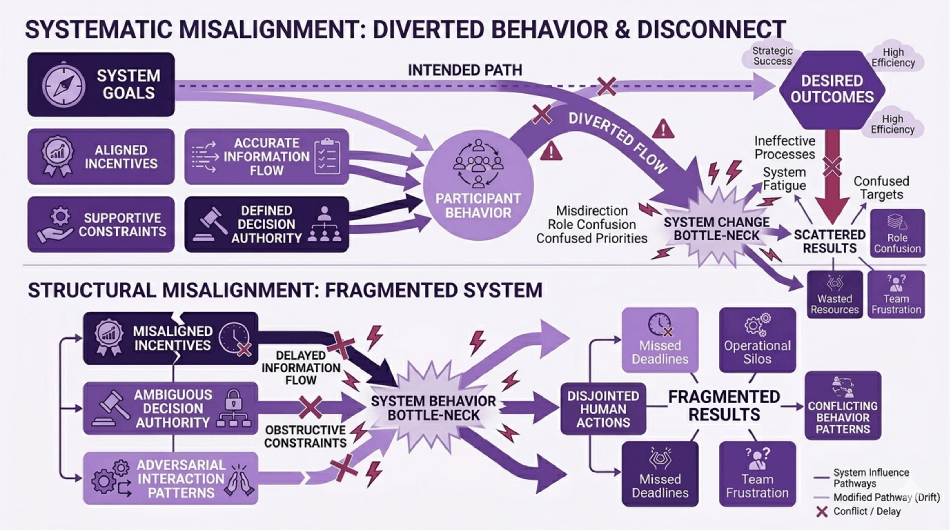
Yet over time something puzzling can happen. The system begins producing outcomes that appear to contradict the very goals it was meant to support.
A process designed to increase efficiency slows work down. A reporting requirement intended to improve visibility overwhelms teams with administrative work. Oversight mechanisms delay decisions until opportunities pass.
The system begins working against its own purpose.
Systems Layer
This situation occurs when system structures generate behavior that conflicts with the system’s intended objectives.
Systems influence behavior through structural signals such as:

Systems Language helps reveal these structural contradictions, allowing organizations to realign system design with the outcomes they actually want to produce.
Pillar: Systems Language — perception.