

Software capability inside organizations is often treated as something to own: licenses purchased, systems installed, teams trained. Over time, this creates a dense internal stack—powerful, but heavy. Each additional capability adds maintenance obligations, learning curves, and long-term commitments, regardless of how frequently it is used.
A simple observation clarifies the tradeoff. Many software needs are episodic. They arise in response to specific client requests, market experiments, or short-lived opportunities. Treating these needs as permanent infrastructure creates mismatch between duration of use and duration of ownership.
Outsourcing software extension intervenes at this mismatch.
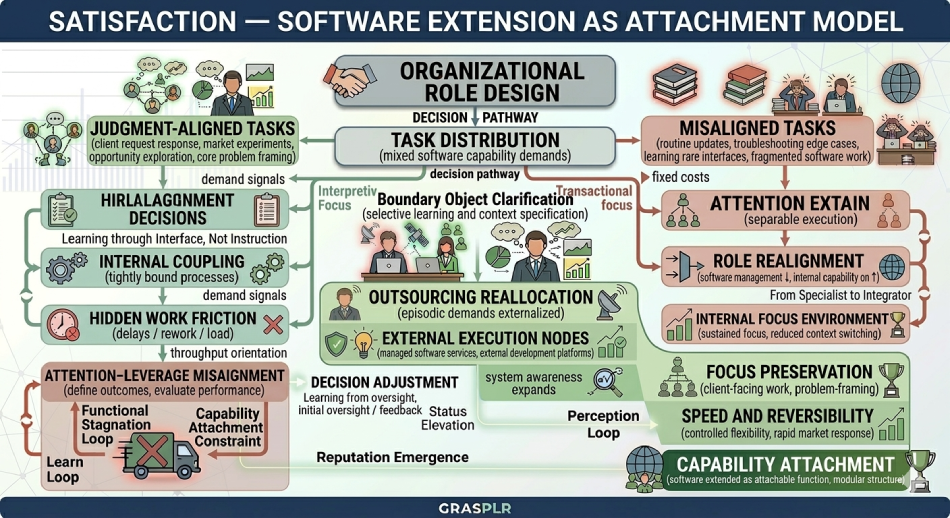
Capability Without Accumulation
When a company outsources a software extension—whether through external development teams, specialized platforms, or managed services—it gains access to functionality without absorbing it into its permanent structure.
It determines how long capabilities are held, where complexity lives, and how reversible strategic moves are. Organizations that treat software as permanently owned infrastructure tend to become slower over time. Those that treat some software as attachable capability remain lighter.
The result is not constant change, but controlled flexibility.
