
Most people focus on events. Systems Thinkers focus on the structures that create them. While others react to immediate problems and visible outcomes, systems thinkers look for the patterns, relationships, and feedback loops operating beneath the surface. They understand that every result emerges from a larger network of interactions. By seeing beyond isolated incidents, they gain the ability to anticipate consequences, identify leverage points, and create solutions that address causes rather than symptoms.
Event-Focused Thinking Creates Endless Cycles
When organizations encounter challenges, the instinct is often to solve the most visible problem. A drop in performance triggers new targets. Customer complaints lead to quick fixes. Declining engagement sparks another campaign. These responses may provide temporary relief, but they rarely change the conditions producing the issue. As a result, the same problems reappear in different forms.
This cycle persists because events are easier to see than systems. People naturally gravitate toward what is immediate, measurable, and urgent. Yet the forces shaping outcomes often operate quietly through habits, incentives, relationships, and feedback mechanisms that remain largely invisible.
Pattern Architects and Structural Awareness
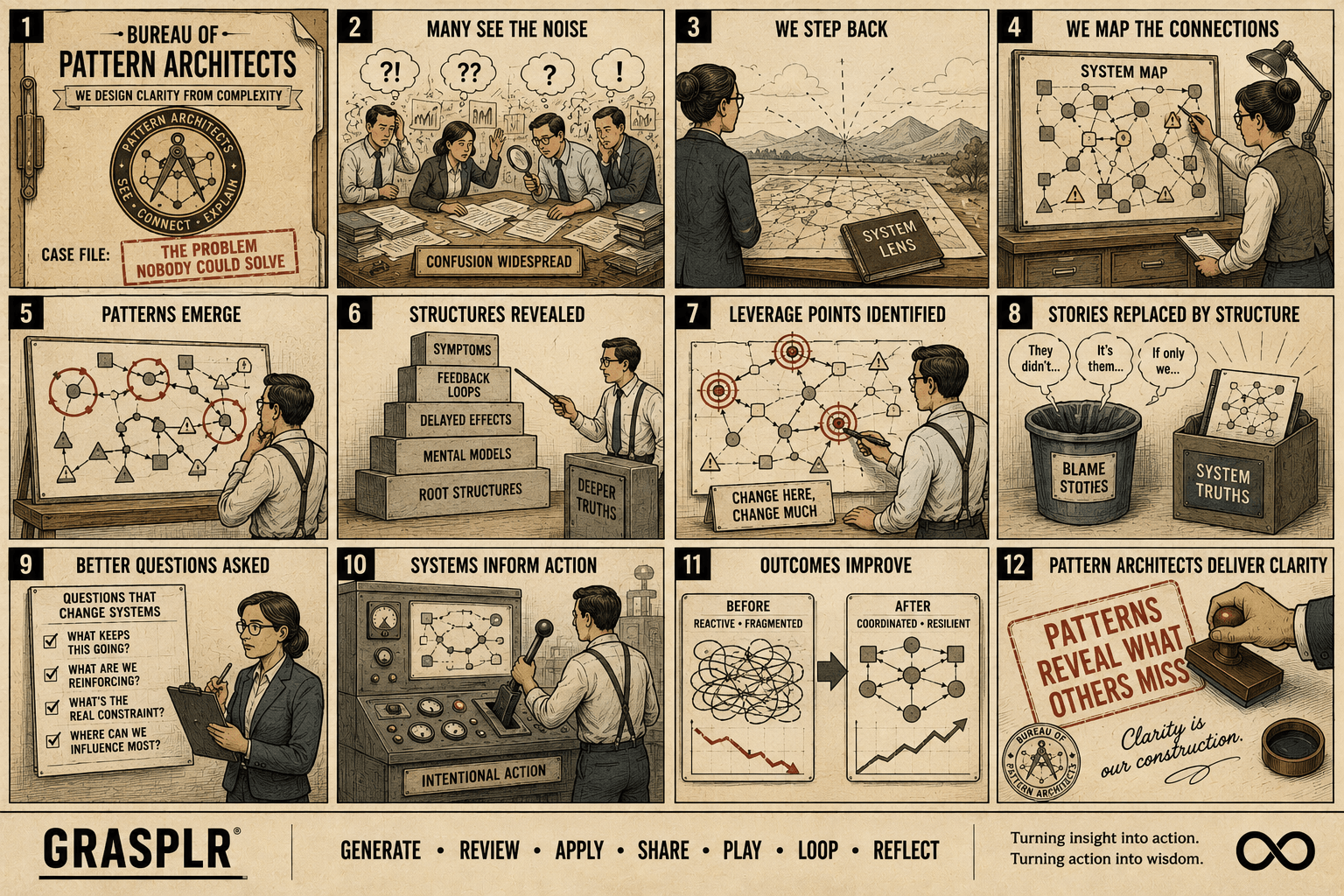
A Pattern Architect is someone who approaches complexity through the lens of interconnected systems. Rather than asking, “What happened?” they ask, “What conditions made this outcome likely?” Their attention shifts from isolated actions to recurring dynamics.
Systems thinkers recognize that behavior emerges from structure. They look for reinforcing loops that accelerate trends, balancing loops that stabilize activity, and delays that obscure cause-and-effect relationships. This perspective allows them to understand why well-intentioned actions sometimes create unintended consequences and why small adjustments in the right place can generate significant change.
Their advantage is not superior intelligence—it is superior perspective. They train themselves to see relationships where others see randomness.
Developing the Habits of a Systems Thinker
Becoming a stronger systems thinker requires replacing reactive observation with structural inquiry. Focus on three practices:
- Pattern Recognition: Look for recurring outcomes across different situations rather than treating each event as unique.
- Relationship Mapping: Identify how people, processes, incentives, and information influence one another over time.
- Leverage Discovery: Search for small structural changes that could produce large downstream effects instead of applying more effort to existing solutions.
These habits gradually shift attention from individual events to the mechanisms generating them. The more consistently you practice them, the more clearly systems become visible.
Seeing the System Changes Everything
Systems thinkers are valuable because they operate at a deeper level of understanding. While others chase outcomes, they examine the structures producing those outcomes. While others respond to symptoms, they investigate origins. This allows them to make decisions that create lasting improvement rather than temporary relief.
In a world of growing complexity, the ability to see interconnected patterns is becoming increasingly important. Pattern Architects understand that meaningful change rarely begins with the event itself. It begins with recognizing the system behind it—and redesigning that system so better outcomes emerge naturally.
systems science