
Some systems remain steady even under pressure.
When conditions become uncertain – deadlines tighten, resources shrink, or unexpected problems appear – these systems continue making consistent decisions. People inside them may feel the pressure, but the direction of the system does not suddenly change.
Other systems behave very differently.
When pressure increases, priorities shift quickly. Decisions become reactive. Teams begin interpreting goals differently, and coordination becomes harder just when clarity is needed most.
The difference often lies in whether the system has a stable center.
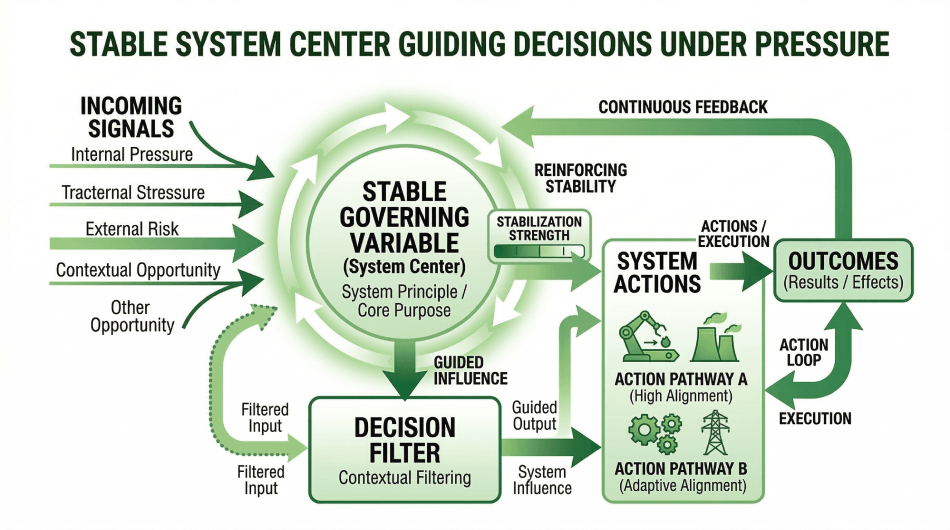
Systems Layer
In Systems Language, a stable center is the governing variable that consistently anchors decision-making across the system.
It functions as a structural reference condition that remains stable even when environmental signals fluctuate.

Within the five-pillar framework, Orientation establishes the stable center that allows the system to maintain direction despite changing conditions.