
Unexpected disruptions are a normal part of complex environments.
A supply chain breaks down. A key team member leaves. Demand shifts suddenly. External conditions change faster than expected.
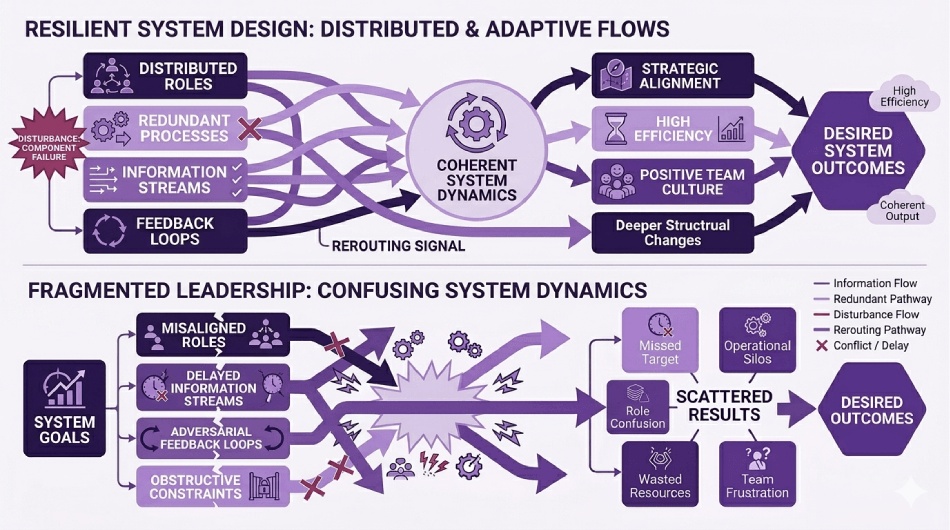
Some systems struggle when these disruptions occur. Work stops, coordination breaks down, and recovery takes significant time and effort.
Other systems absorb the disturbance and continue functioning. They adapt, reorganize, and stabilize without collapsing.
The difference often lies in how the system is designed.
Systems Layer
Resilience in a system refers to its ability to continue functioning when conditions change or disturbances occur.
Structural resilience emerges from design features that allow the system to adapt without losing coherence.

Pillar: Systems Language — perception.